



The Realm of Hidden Symbols
Decode chess pieces as digits and crack your first multi-digit codes.
- Portal Gate— the free starting island
- Symbol Towers— rising next
- More islands— open as the realm grows
- Symbol Decoding
- Place Value
- Number Sense
A 4th grade math adventure where chess pieces become a secret number code. Kids decode, solve real math, and verify every answer in standard digits — no chess knowledge needed.
What Is Chess 4 Math?
Chess 4 Math is not a chess game — no chess knowledge is needed. It's a math practice adventure where chess-piece icons stand for the digits 0–9. Children decode the symbols, solve real grade-level math, and verify every answer in standard numbers.
The code starts with a simple symbol-to-number map.
 0King
0King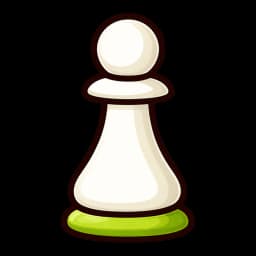 1Pawn
1Pawn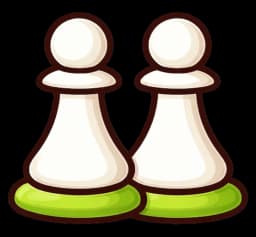 2Double Pawn
 3Knight
 4Bishop+1
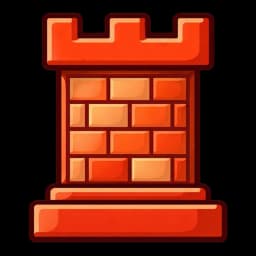 5Rook
5Rook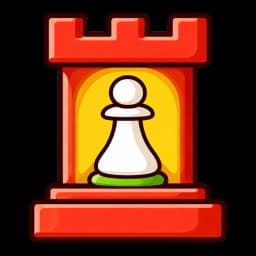 6Rook+1
 7Rook+2
 8Rook+Knight
 9Queen
How It Works
Every puzzle follows the same three-step rhythm: children translate chess symbols into numbers, solve the real math problem, then verify the answer in standard digits.
Decoding in action
 3Knight
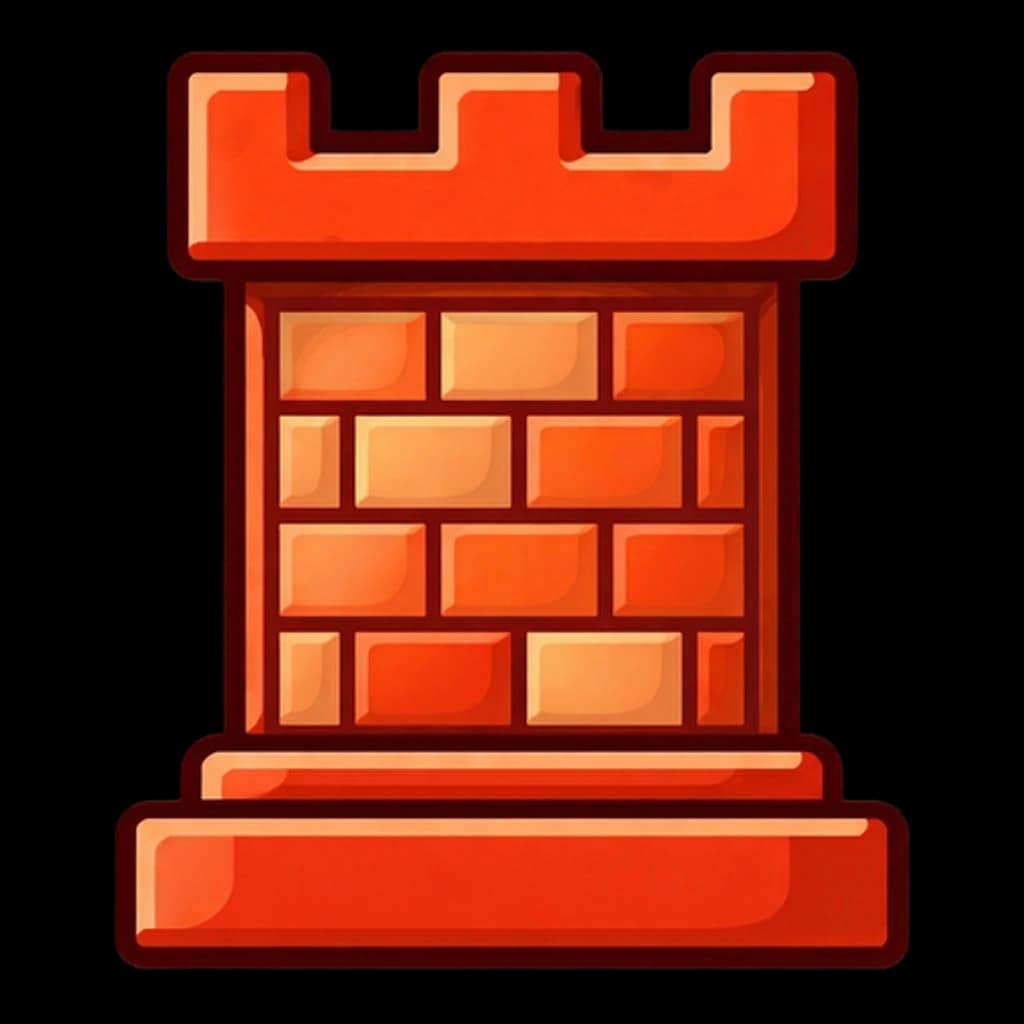 5Rook
5Rook 8Rook+Knight
01
Decode
Children translate chess symbols into numbers.
Translate symbols
02
Solve
They solve the real math problem.
Do the math
03
Verify
They check the answer in standard digits, so the learning stays visible.
Check in digits
Real gameplay — Portal Gate, the free starting island
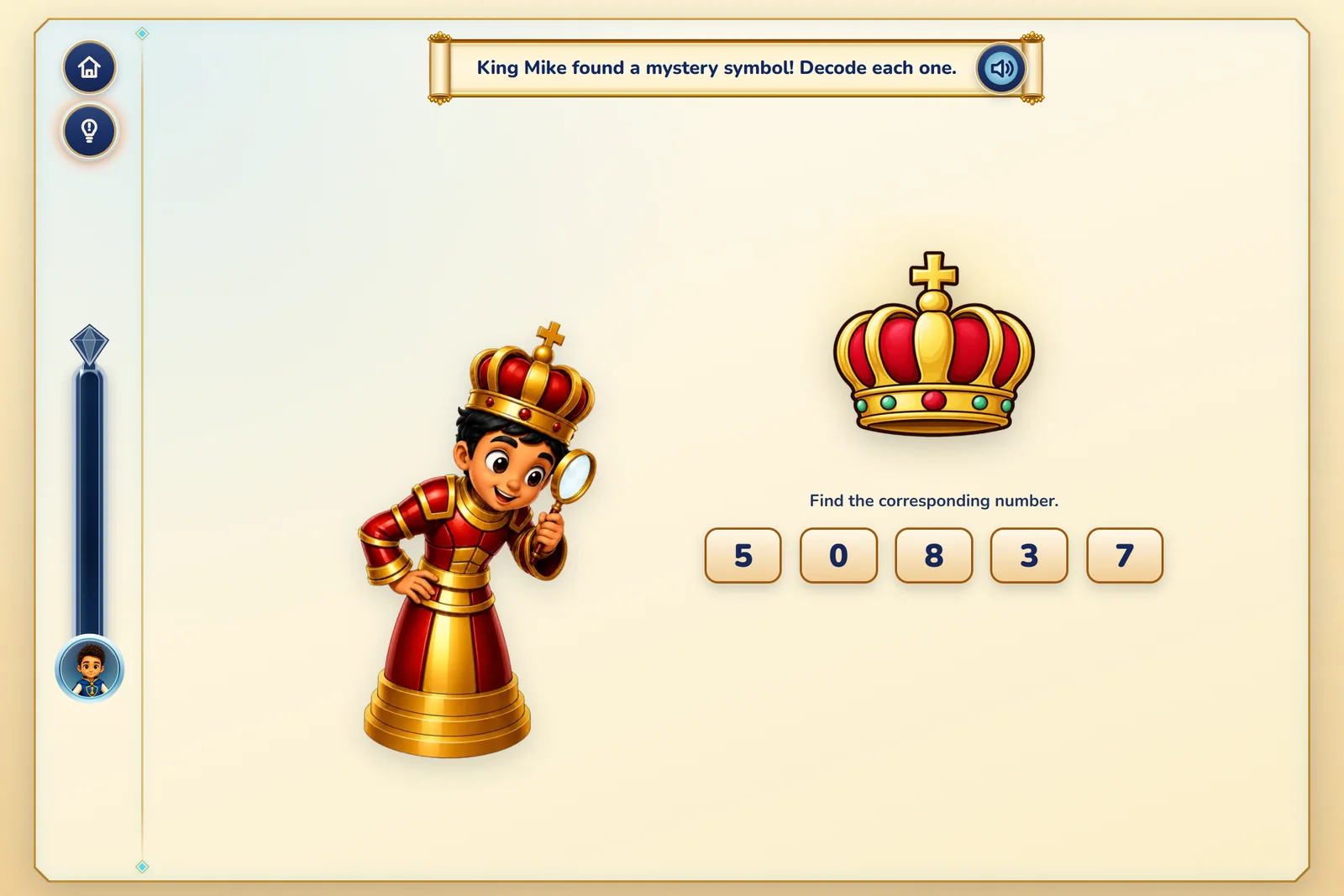
Each chess piece stands for a number. Figure out what the pieces mean, solve the equation, then reveal the answer.

This is the core rhythm. Puzzles grow harder as the adventure continues.
Real math, visibly
Place value, addition, subtraction, multiplication — and every activity ends in standard digits, so you can see the learning.
For your child: number sense — symbols, quantities, and digits connected.
Puzzle, not worksheet
The code-cracking mechanic gives kids a reason to compute. No coins, no pets, no bribes.
For your child: patterns, logic, and a reason to explain their thinking.
Built for independence
Example-first lessons — I do, we do, you do — designed so an 8–10-year-old can run it alone.
For your child: the confidence of solving, and checking, on their own.
One adventure realm builds place value, addition, subtraction, multiplication, and early reasoning skills for 4th grade — starting with symbol decoding, with new islands opening as the realm grows.
Origin & Credibility
Chess 4 Math began as Ramón Lorente's published classroom curriculum — created by a FIDE Chess Master and educator — and is now being adapted into an interactive math adventure for children.
Explore the origin storyWhat educators said
Students were challenged to think critically while enjoying the activities.
Parent Questions
Short, honest answers — no fine print.
No. Chess 4 Math is math practice. The chess pieces are a secret code for the digits 0–9 — there are no chess rules, moves, or strategy anywhere in the math journey.
Not at all. Children only learn what each piece stands for — the simple symbol map near the top of this page — and that takes a few minutes.
Yes. Every activity is grade-level math — place value, addition, subtraction, multiplication — and every answer is verified in standard digits, so you can see the learning.
It's designed around 4th grade math goals — usually ages 9–10. Chess 4 Math is starting with 4th grade.
A tablet or a computer. The activities are built for big, touch-friendly screens — a phone is fine for this page, but not ideal for playing.
No ads and no child account. The preview runs right in the browser, and progress stays on your device.
Parent Preview
Portal Gate is ready to play. Let your child try the first Chess 4 Math adventure today.
Portal Gate plays best on a tablet or computer.
Free to try · No ads · No child account needed for the preview